2025. 140 x 215 mm. Hardcover. 632 p.
ISBN 978-5-4448-2636-2


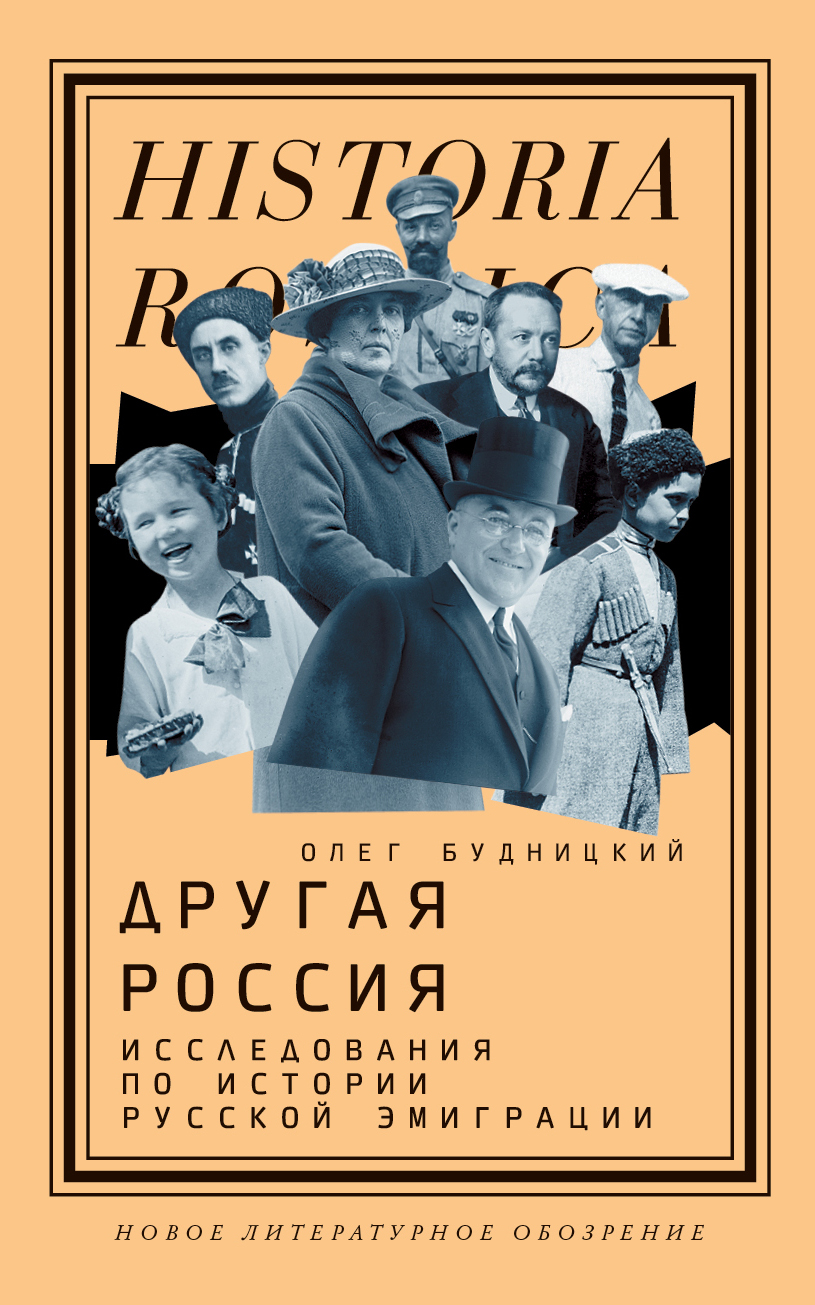
Annotation: Despite the opinion of French revolutionary Georges Danton, who once proclaimed that it is impossible to “carry your homeland with you on the soles of your boots,” Russian emigrants of the “first wave” (1918-1940) did manage to create “another Russia” abroad. Various aspects of this diaspora’s political and social life are discussed in Oleg Budnitskii’s new book, Another Russia, which is based on materials gathered from foreign archives. Budnitskii explores the fate of “Russian money” abroad: the finances of the imperial family; the search for the last of Admiral Kolchak's gold that went missing along with the train onto which it was loaded; the city of Petrograd’s silver treasury that ended up in the hands of General Wrangel and became a source of funding for his anti-Bolshevik army. In another section, the historian explores the process by which Russian emigrants searched for ways to overcome Bolshevism—from hopes for its evolution or decay from within, to ideas of a transition to terror. The most extensive part of the book, however, is devoted to the history of emigration during World War II. In the wartime period, some emigrants adopted the principle of siding “against the Bolsheviks, even with the devil” in the guise of Adolf Hitler; other emigrants believed in a metamorphosis of Soviet power and tried to reconcile themselves with it. Budnitskii’s book offers profiles of prominent Russian emigrants, including diplomats, lawyers, entrepreneurs and writers.
Other books by the Author